
Somewhere between 11 and 14, a lot changes at once. Homework gets harder, friendships get more complicated, and the kid who used to tell you everything now answers with one word. Most parents can feel high school coming and want their child walking in with good habits, not just good intentions. Martial arts for teens is one of the most practical ways to build those habits during the middle school years, because it asks for the exact things high school will ask for: showing up, staying focused and working toward goals that take months, not minutes.
Here’s why the early teen years are such a good window, what the research says about safety and fitness, and how we approach it for 12- to 14-year-olds at GMA in Gallatin, TN.
Why Ages 12 to 14 Are a Turning Point
Middle schoolers are old enough to understand why discipline matters and young enough that habits still stick easily. They’re also at an age where a lot of kids drift away from activities. Team sports get more competitive and cut players. Free time gets filled with phones and gaming. Without a plan, afternoons can turn into hours of screen time.
The fitness numbers back this up. The CDC recommends that kids and teens ages 6 to 17 get 60 minutes or more of moderate-to-vigorous physical activity every day, including muscle- and bone-strengthening activity at least three days a week. Martial arts covers all three in a single class: cardio, bodyweight strength work, and jumping and kicking drills. If screens are already winning the afternoon battle in your house, our post on screen time alternatives for kids has more ideas.
What Martial Arts for Teens Builds Before High School
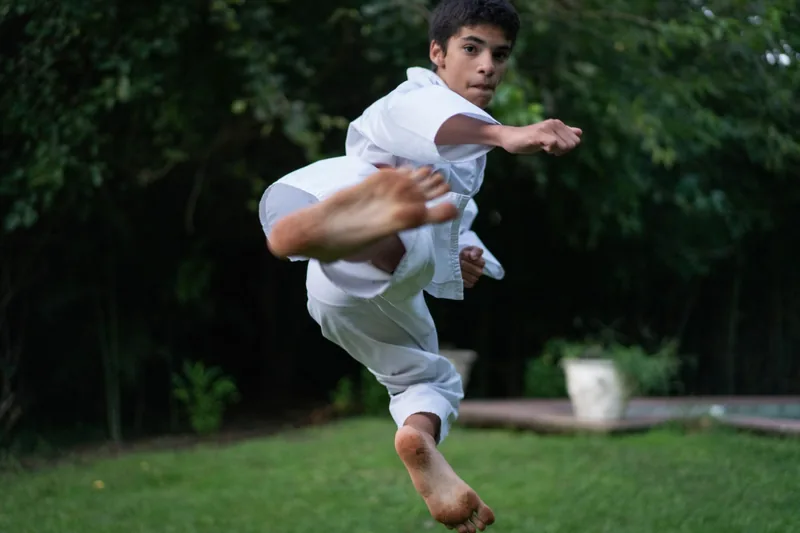
Physical fitness is the obvious benefit. The American Academy of Pediatrics notes in its clinical report on youth martial arts that training can give kids and teens vigorous exercise that improves overall fitness, and that martial arts can help build strength, balance, flexibility, self-esteem and self-awareness. For a middle schooler, though, the bigger payoff is usually the habits:
- Discipline that isn’t imposed by a parent. In class, the instructor sets the standard and the student meets it. Teens often push back less on a coach than on Mom or Dad.
- Long-term goal setting. Belts are earned over months. A 13-year-old who learns to work toward a goal for three months at a time is practicing the same skill high school courses and college applications will demand. Our guide to martial arts belt ranks explains how that progression works.
- Focus under pressure. Performing a form in front of an instructor, or testing for a new belt, is a small, safe dose of pressure. Practicing it makes test days and presentations less scary.
- Confidence that comes from competence. Teens can tell the difference between empty praise and real skill. Earning a belt is proof they did something hard. We dig into this in how martial arts builds confidence in kids.
- Respect and a steady peer group. Bowing in, listening to instructors and training alongside the same students week after week gives teens a positive group to belong to, which matters a lot in the middle school years. It’s also part of the anti-bullying effect of martial arts.
Is Martial Arts Safe for Teens?
It’s a fair question, and the honest answer is that it depends on how the training is run. The same AAP report explains that noncontact forms and techniques may carry a lower relative risk of injury, while contact sparring and competition carry a higher risk. Its recommendation is that competition and contact-based training should wait until a young athlete has shown enough physical and emotional maturity, and solid skill, during noncontact training. It also stresses that kids should train under instructors who understand their limits based on age, maturity, size and experience.
When you’re comparing programs for a teen, ask a few direct questions: Who teaches the classes, and what are their credentials? Is there sparring, and when does it start? How do instructors match students by size and skill? Our parent guide, is martial arts safe for kids, walks through the full checklist.
How We Work With Teens at GMA in Gallatin, TN
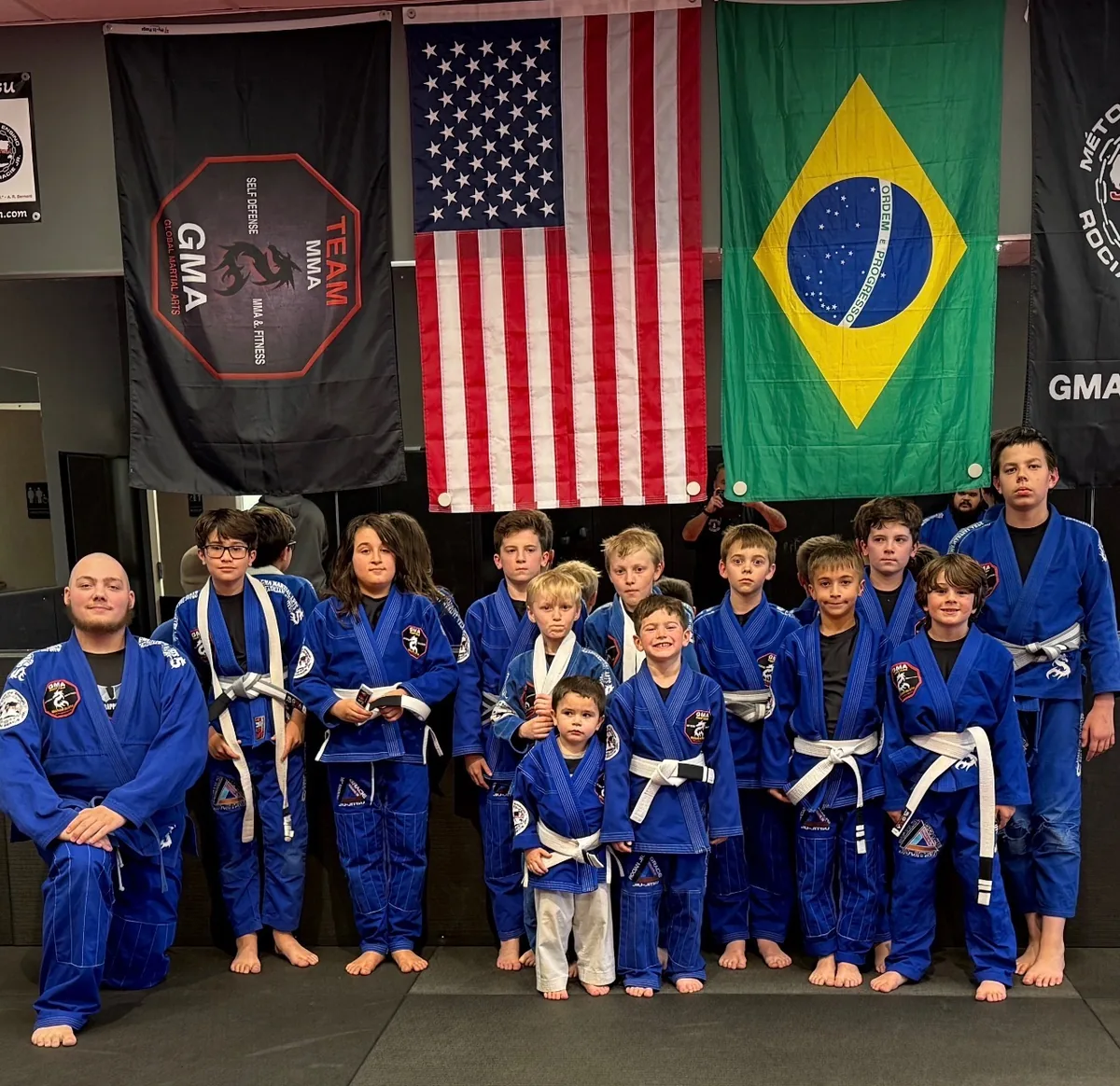
Our after school program serves ages 5 to 14, so 12- to 14-year-olds are the oldest kids on campus. We pick up from middle schools including Liberty Creek Middle, Station Camp Middle, Rucker Stewart Middle and Joe Shafer Middle. Every child gets a free private assessment before starting so we can place them with the right peer group and staff support, which matters for older kids who don’t want to feel lumped in with the little ones.
Homework comes first each afternoon, and report cards are part of our advancement criteria, so effort in class and effort on the mat are connected. Physical education is included free through TaeKwonDo and Brazilian Jiu-Jitsu. Students who participate take 2 to 3 classes per week per style, and belt testing eligibility usually comes after about 3 months of consistent attendance. Leadership and life skills training runs through the program, with a structured progression in discipline, respect, confidence and focus. GMA is a Bully Free Zone, and all staff are background-checked and CPR and First Aid certified.

The middle school years are also when kids start to feel the difference between being supervised and being challenged. Our post on after school programs for middle schoolers covers why structure still matters at this age, even when kids insist they don’t need it.
What Happens After 14?
Our after school program ends at 14, but training doesn’t have to. GMA Academy is part of the same family as Global Martial Arts USA, which offers a Kids & Teens track and adult classes. According to its TaeKwonDo program, the typical path to 1st Degree Black Belt takes 3.5 to 4 years of consistent training. A student who starts at 12 or 13 can realistically be working toward black belt during high school. Teens who prefer grappling can keep going in Brazilian Jiu-Jitsu.
Homeschool families get martial arts PE through our homeschool academy, which serves grades K through 12. Current after school rates are on our school pricing page.
See It in Action
Schedule a consultation and tour our campus in Gallatin, TN. Every child gets a free private assessment before starting, so we can place them with the right peer group and staff support.
Book a ConsultationOr call us at (731) 324-3850
Frequently Asked Questions
No. Teens often progress quickly because they can focus longer and understand technique. Starting at 12, 13 or 14 still leaves plenty of time to earn rank, and at Global Martial Arts USA the typical path to 1st Degree Black Belt takes 3.5 to 4 years of consistent training.
Martial arts gives teens vigorous exercise plus strength, balance and flexibility. It also builds discipline, focus, goal setting and confidence that comes from earning each belt, along with a steady, positive peer group during the middle school years.
It can be, when it is taught well. The American Academy of Pediatrics notes that noncontact forms and techniques may carry a lower relative risk of injury than contact sparring and competition, and recommends that contact training wait until a young athlete shows enough maturity and skill under qualified instructors.
Ages 5 to 14. Every child receives a free private assessment before starting so we can place them with the right peer group and staff support. Our homeschool academy serves grades K through 12.
Yes. Physical education through TaeKwonDo and Brazilian Jiu-Jitsu is included free for after school members. Students who participate take 2 to 3 classes per week per style, and belt testing eligibility usually comes after about 3 months of consistent attendance.