
Ask a parent what they most want for their child and “confidence” is almost always near the top of the list. It’s also one of the hardest things to give a child directly — you can’t simply tell a kid to believe in themselves and expect it to take. That’s exactly why so many families are drawn to the idea that martial arts builds confidence in kids. But how does it actually work, and is it real or just a marketing promise? Here’s the honest answer, the mechanisms behind it, and how we put them to work every afternoon at GMA in Gallatin, TN.
What Confidence Really Is — and Why It’s Hard to Build
Real confidence isn’t a personality trait a child is born with or without. It’s the quiet belief that “I can handle hard things,” and it’s built from evidence — a track record of facing something difficult and coming out the other side. Psychologists sometimes call these “mastery experiences,” and they’re the single most reliable source of genuine self-belief.
The problem for most kids is that modern childhood offers surprisingly few of them. Praise is plentiful, but earned challenge is rare, and a lot of children’s time gets absorbed by passive activities that never ask anything of them. A child can go weeks without a single moment where they attempted something genuinely hard, struggled, and succeeded. That gap is where confidence quietly fails to grow — and it’s the gap a well-run martial arts program is built to fill.
How Martial Arts Builds Confidence in Kids
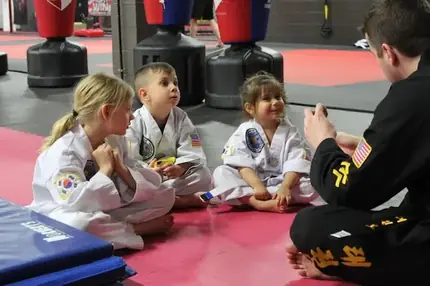
Martial arts is unusually good at manufacturing mastery experiences on a predictable schedule. A few reasons it works so consistently:
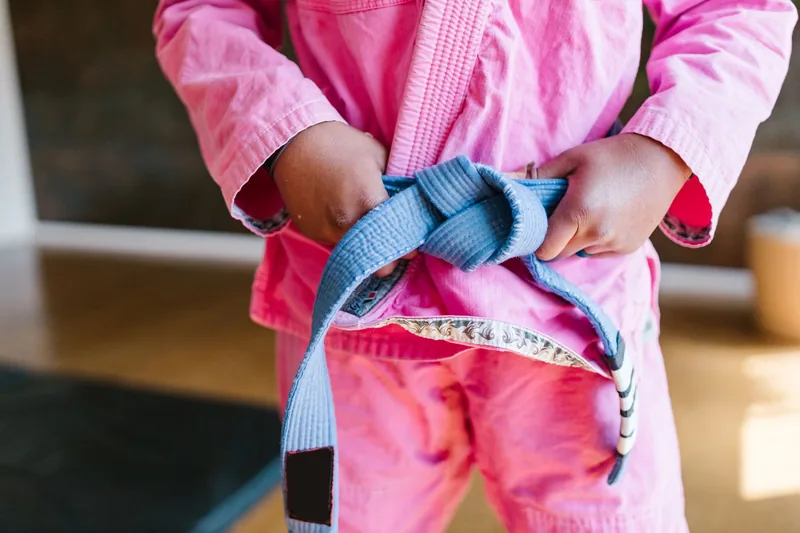
- Progress you can see and hold. The belt system turns an abstract idea — “getting better” — into concrete, earned milestones. A child tests, passes, and ties on a new belt they can literally see around their waist. That visible progress is powerful, which is why we go deeper on it in our guide to what parents should know about belt ranks.
- Physical competence. Learning to control your own body — to throw a clean kick, hold a stance, fall safely — gives kids a grounded, physical sense of capability that transfers off the mat.
- Safe struggle. Martial arts lets a child bump into their limits in a structured, supervised setting where failing a technique is just part of learning, not something to be embarrassed about.
- Belief borrowed from a coach. Before kids believe in themselves, they often borrow belief from an instructor who clearly believes in them. A good coach’s steady expectation becomes the child’s own inner voice over time.
Stack those week after week and something shifts. The child who wouldn’t speak up starts raising their hand. The one who quit at the first sign of difficulty starts pushing through. That’s confidence being built the only way it can be — on a foundation of real evidence.
The Honest Version: It’s the Environment, Not the Uniform
Here’s the part a lot of programs won’t tell you. The research on martial arts and self-esteem is genuinely encouraging — studies link training to better emotional regulation, focus, and self-belief — but it’s not automatic. At least one careful study found no confidence benefit at all, and the difference almost always came down to the quality of instruction and culture, not the style of martial art.
In other words, the uniform doesn’t build confidence — the environment does. A program that shames kids, pushes them into competition before they’re ready, or hands out belts to keep parents paying will not build lasting self-belief. One that challenges kids at the right level, celebrates effort over talent, and keeps every child physically and emotionally safe absolutely will. This is the same reason we’re candid with parents about safety in our honest guide to whether martial arts is safe for kids: the details of how a program is run are everything.
How Confidence Grows Every Afternoon at GMA
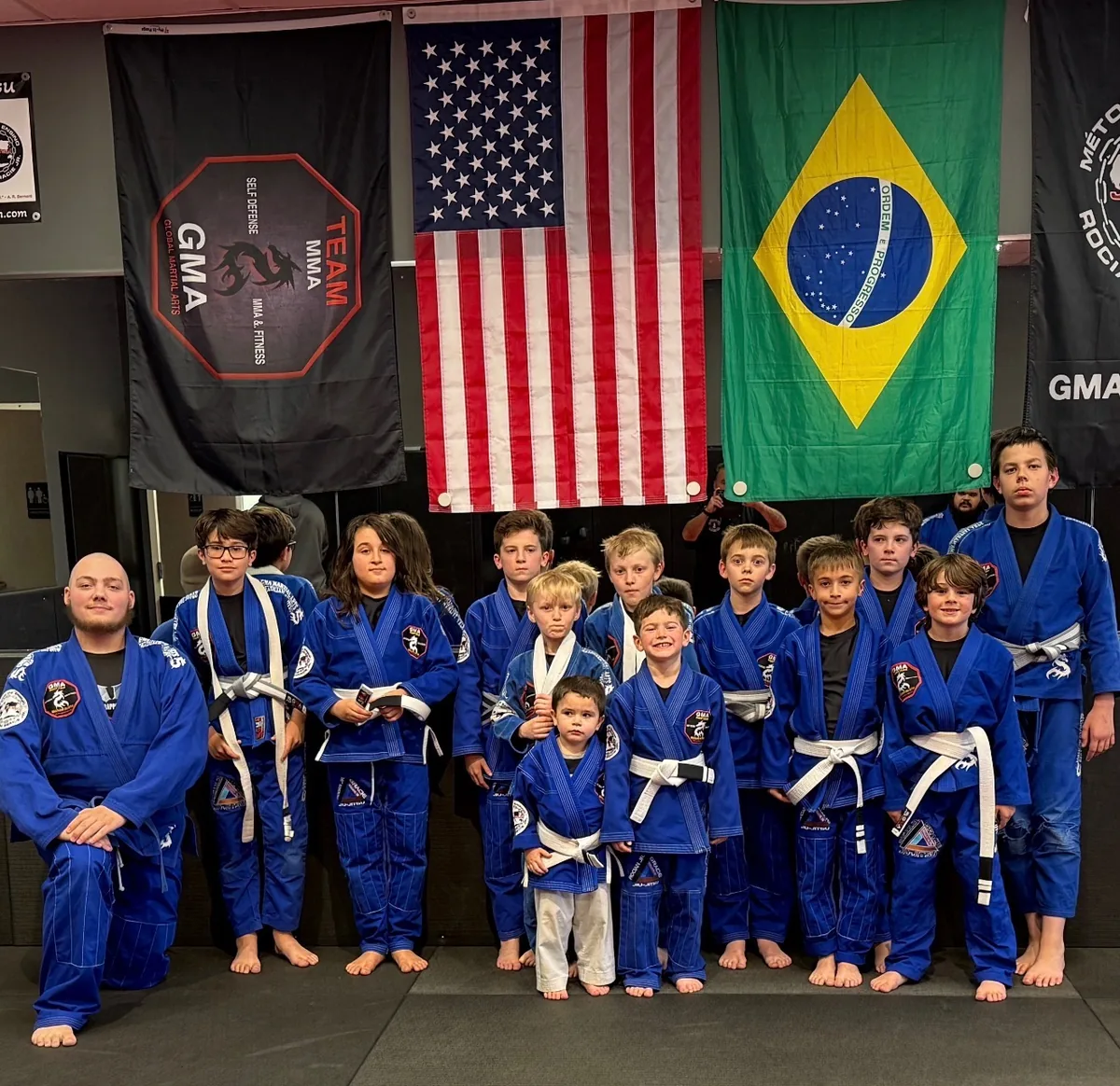
At GMA, martial arts isn’t a once-a-week class squeezed onto an already-full calendar — it’s built right into the after-school day. We pick kids up from 14 local schools across Gallatin and Sumner County and bring them to our 6,000 sq ft campus, where physical education through martial arts is included free with every enrollment. That means your child gets a genuine mastery experience nearly every single afternoon, led by the same certified, background-checked instructors who get to know them by name.
That consistency is the secret. Confidence built once a week is fragile; confidence built daily, inside a stable routine of homework help, movement, and character work, becomes part of who a child is. It’s the same philosophy behind everything in our programs and the reason our after school program leans on martial arts rather than babysitting — the product of more than 33 years of youth development from the Spillmann family, and part of why families voted GMA Best in Sumner County in 2024 and 2025. Parents who want the broader picture often start with the kids martial arts program at Global Martial Arts USA, then see how it comes to life in the after-school setting here.
Confidence isn’t a gift you can hand your child — but it is something they can earn, one small win at a time, in the right environment. And if you’re also rethinking how your child spends their afternoons, our take on screen time versus active time pairs naturally with this one: the same active, structured hours that shrink screen time are the hours that quietly build a more confident kid.
Watch Your Child Grow More Confident
Schedule a free consultation and tour our 6,000 sq ft campus in Gallatin, TN. See how GMA turns everyday effort into real, lasting confidence through martial arts, homework help, and character building.
Book a ConsultationOr call us at (731) 324-3850
Frequently Asked Questions
Yes, when it’s taught well. Confidence isn’t handed to a child in a uniform — it’s built through repeated mastery experiences: learning a skill that felt impossible, testing for a belt and passing, and being coached through struggle by an adult who believes in them. Martial arts is unusually good at stacking those experiences because progress is visible and earned. The research is strongest when instruction is high-quality and supportive, which is why the school you choose matters more than the style.
Most parents notice small shifts within the first few weeks — a child making eye contact, speaking up in class, or trying something without being pushed. Deeper, durable confidence tends to show up over months, as a child earns their first belt promotions and realizes that effort reliably leads to progress. It’s a slow build by design; that’s exactly why it lasts.
It’s often ideal for them. Martial arts gives shy or anxious kids a predictable structure, clear expectations, and a safe way to face challenge in small, manageable steps — without the pressure of a scoreboard or a crowd. Because they compete mostly against their own last attempt, quieter children build confidence at their own pace instead of being thrown into head-to-head competition.
Most children can begin around age 5, when they’re able to follow instructions and focus for short blocks. At GMA in Gallatin, TN, martial arts is woven into our after school program for ages 5 to 17, so a child gets the confidence benefits every afternoon as part of their routine rather than as one more thing on the family calendar.