
Every parent knows the moment. Your child slams a door, hits a sibling or melts down in the checkout line, and you have about two seconds to decide what happens next. Taking away the tablet or raising your voice can end the scene. It rarely changes what happens next time. Teaching kids self control is the slower, steadier work that actually does, and it’s the heart of what good discipline is supposed to do.
Discipline comes from a word that means “to teach,” not “to punish.” Here’s what the research says about that difference, what you can try at home this week, and how we build self control every afternoon at GMA in Gallatin, TN.
Why Punishment Alone Doesn’t Build Self Control
Punishment answers the question “what happens when I get caught?” Self control answers a different one: “what do I do when nobody is making me stop?” Kids need the second skill far more than the first.
The American Academy of Pediatrics is direct about this. Its parent guidance says parents should not spank or hit children, because spanking is linked to more aggression and anger, not less. It also warns that yelling and shaming tend to backfire, leading to more misbehavior over time. What the AAP recommends instead is clear rules, specific praise for good behavior, and calm consequences that you explain ahead of time and follow through on.
None of that means letting things slide. It means the goal of every consequence is to teach a skill, not just to make a child feel bad.
Why Self Control Matters So Much
Self control can sound like a nice-to-have. The research says otherwise. A landmark study from New Zealand followed about 1,000 children from birth to age 32. Childhood self control predicted adult health, finances, substance problems and criminal records, even after the researchers accounted for intelligence and family background. When they compared siblings raised in the same home, the sibling with lower self control as a child still tended to have poorer outcomes.
The authors closed with a hopeful point: self control can be strengthened, and helping kids build it could pay off for decades. That’s good news for parents. It’s a skill, and skills can be practiced.
6 Ways to Start Teaching Kids Self Control at Home
- Set the rules before the moment. Kids handle limits better when they know them in advance. “Screens go off at 7:00” works better than a surprise shutdown mid-game.
- Name the good stuff. Specific praise (“You were frustrated and you walked away instead of yelling”) shows a child exactly what self control looks like.
- Keep consequences calm and connected. If a toy gets thrown, the toy takes a break. Say it once, in a normal voice, then follow through right away.
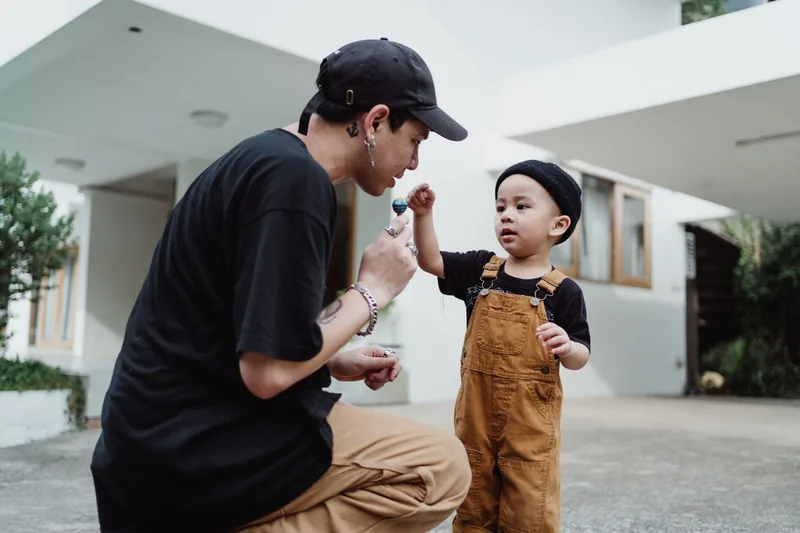
- Get down to their level. A short, quiet talk at eye level after everyone calms down teaches more than a lecture in the heat of the moment. Ask what they could try next time.
- Practice waiting. Small, everyday delays (finishing a chore before dessert, taking turns in a board game) are reps for the “wait” muscle.
- Model it yourself. Kids watch how adults handle traffic, bad news and spilled milk. Saying “I’m frustrated, I’m going to take a breath” out loud teaches the skill in real time.
If you’re seeing a lot of after-school meltdowns or restless energy, it may also be a sign your child needs more structure in the afternoon. Our post on 5 signs your child needs a structured after school program walks through what to look for.
How Structured Activities Build Self Control
Self control grows fastest when kids get lots of low-stakes practice. That’s why structured activities help so much. A martial arts class, for example, asks a child to stand still and listen, wait for their turn, control the power of a kick, and try again after a mistake. Bowing in and out of class and earning a new belt over weeks all teach kids to manage impulses for a goal they care about.
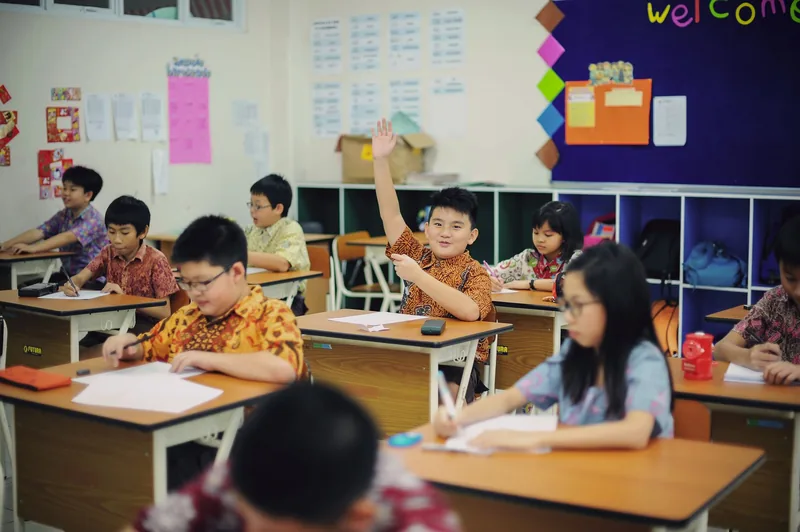
Researchers have measured this. In a 2004 study of a school-based Tae Kwon Do program, students improved in self-regulation and classroom conduct compared with classmates in regular PE. We break that study down in martial arts and academic performance, and our guide to martial arts belt ranks shows how belt goals keep kids working toward something over time.
How We Practice Discipline Without Punishment at GMA in Gallatin, TN
Our after school program is built around this idea. Leadership and life skills training is built into the program, and it’s a character-first curriculum: a structured progression in discipline, respect, confidence and focus, with character development through positive reinforcement and structured goals. In plain terms, we catch kids doing the right thing, and we give them clear goals to work toward.
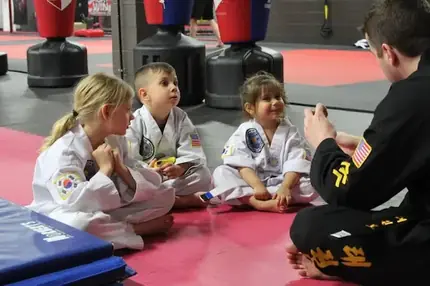
Martial arts physical education is included free, so kids practice listening, patience and controlled effort every afternoon. Report cards are part of our advancement criteria, which connects the habits they build on the mat to the classroom. GMA is also a Bully Free Zone, and our staff is background-checked and CPR and First Aid certified. Our program is led by the Spillmann family, including Joanne Spillmann, who holds a B.S. in Child Development. You can meet the team on our about page.
Homeschool families get the same structured martial arts PE through our homeschool academy. Classes come from the same family behind Global Martial Arts USA, which has worked with kids for more than 33 years. For more on the character side, read how martial arts builds confidence and the anti-bullying effect of martial arts. Current rates are on our school pricing page.
See It in Action
Schedule a consultation and tour our campus in Gallatin, TN. Every child gets a free private assessment before starting, so we can place them with the right peer group and staff support.
Book a ConsultationOr call us at (731) 324-3850
Frequently Asked Questions
No. Kids still need clear rules and consequences. The difference is that consequences are explained ahead of time, delivered calmly and followed through, instead of hitting, yelling or shaming. The American Academy of Pediatrics recommends exactly that approach.
Self control starts developing early and keeps growing through childhood and the teen years. School-age kids are old enough to talk through choices, understand consequences and practice waiting, so ages 5 to 14 are a great window to build the habit.
The American Academy of Pediatrics advises parents not to spank or hit children. Spanking is linked to more aggression and anger over time, not better behavior. Harsh yelling and shaming also tend to backfire.
Every class asks kids to listen, wait their turn, control their movements and keep trying after a mistake. Belt goals add a reason to stick with it for weeks at a time. A 2004 study of a school-based Tae Kwon Do program found gains in children’s self-regulation and classroom conduct.
Our leadership and life skills training is a character-first curriculum built on positive reinforcement and structured goals, with steady progression in discipline, respect, confidence and focus. GMA is also a Bully Free Zone, and report cards are part of our advancement criteria.