

Math gets a curriculum. Reading gets a curriculum. Physical education is usually the subject that quietly slips off the homeschool week. A walk here, a bike ride there, and before long a month has gone by without anything that looks like real PE. If you are looking at homeschool PE classes, you are probably already feeling that gap.
We run a full-day homeschool academy in Gallatin, TN, where physical education is built into the schedule. This guide covers why PE still matters, how much activity kids actually need, what Tennessee expects, and what to look for in a program, whether that ends up being ours or not.
Why PE Still Matters for Homeschooled Kids
Homeschooling gives families a lot of control over the school day. The trade-off is that the movement built into a traditional school (recess, gym class, walking between buildings) does not happen on its own at a kitchen table. Kids can sit for hours without anyone noticing.
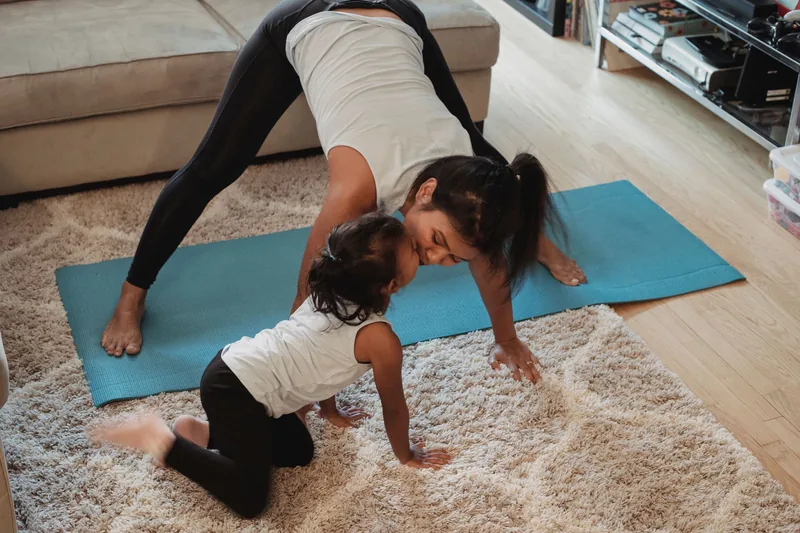
Regular activity does more than burn energy. Kids who move consistently build stronger bones and muscles, sleep better, and tend to focus better when they sit back down to work. A structured PE class adds something free play does not: an adult teaching technique, building skills in order, and holding kids to a standard. Our post on why physical activity matters for kids goes deeper on the research.
How Much Activity Do Kids Need?
The federal physical activity guidelines recommend at least 60 minutes of moderate-to-vigorous activity every day for kids and teens ages 6 to 17, with muscle- and bone-strengthening activity at least three days a week.
Public schools in Tennessee give a useful benchmark for the structured piece. Under Tennessee law, public elementary schools must schedule at least 130 minutes of physical activity per week, and middle and high schools at least 90 minutes. That is the floor for a school day, not the whole daily 60, but it is a fair target for how much structured time a homeschool week should include.
What Tennessee Expects From Homeschool PE
Tennessee’s homeschool rules focus on registration, instruction time, and testing rather than a set weekly PE schedule. Our guide to Tennessee homeschool laws walks through the full requirements, so we will not repeat them here.
Where PE shows up most is high school. For public school students, the state’s diploma requirements include one credit of Wellness and a half credit of Physical Education. Church-related umbrella schools set their own course expectations, and many ask for PE or wellness on a high school transcript. If your teen is heading toward college or a school transfer, check with your umbrella school or curriculum provider about what they want documented.
What Good Homeschool PE Classes Look Like
Not every activity counts as physical education in a meaningful way. When you compare homeschool PE classes, look for:
- Consistency. Several sessions a week on a set schedule, not a once-a-month field day.
- Real instruction. A qualified instructor teaching skills in a progression, not just supervising a game.
- A full mix of fitness. Strength, flexibility, coordination, and cardio, not one of them.
- Visible progress. Some way for your child (and you) to see they are improving.
- Peers. A consistent group to train with. PE doubles as one of the best social outlets in a homeschool week. More on that in our post on homeschool socialization.
- Safety. Background-checked staff and a supervised space.

How GMA Builds PE Into the Homeschool Day
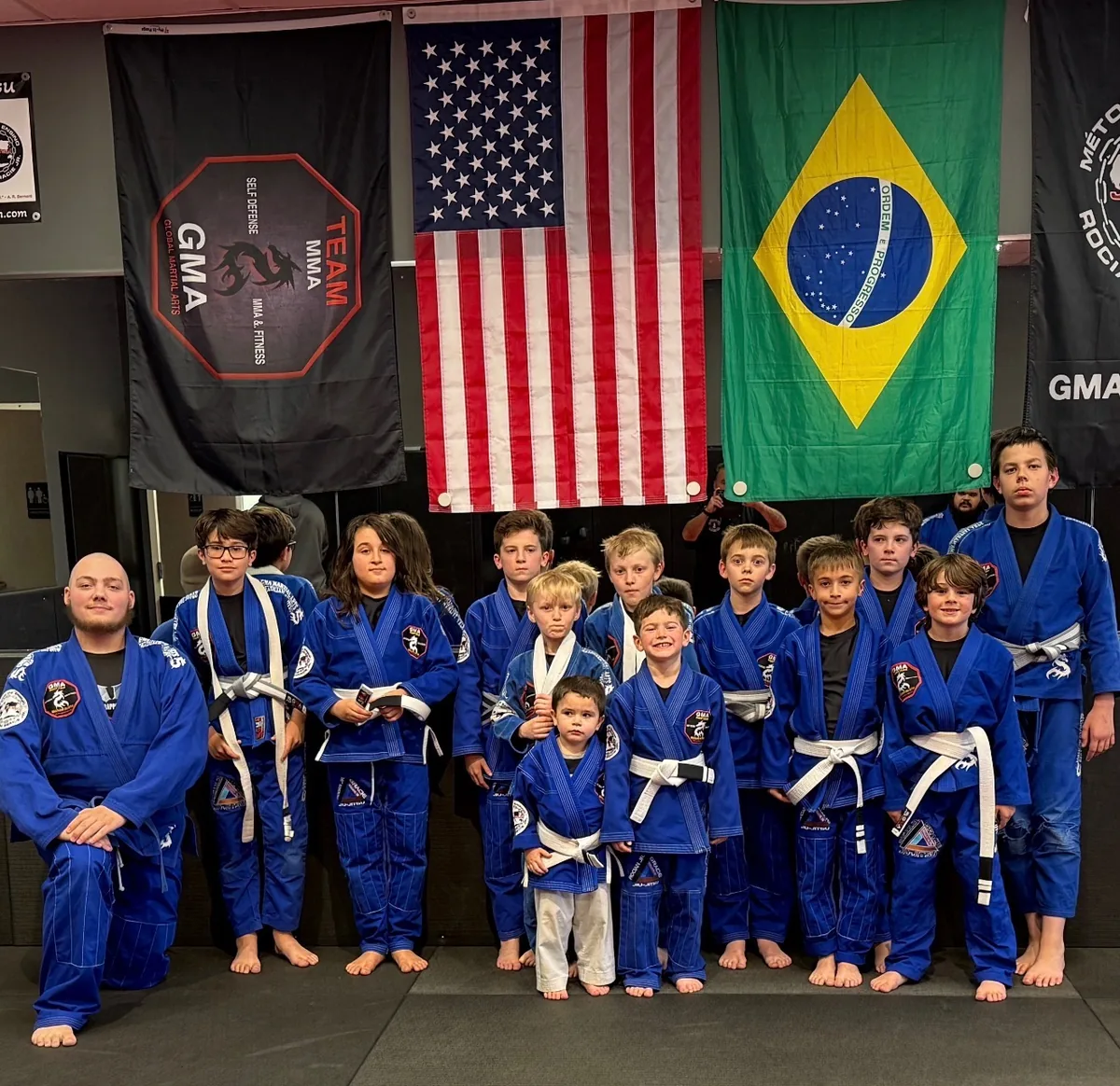
At GMA, PE is not an add-on families have to schedule separately. Every student in our K-12 homeschool academy gets structured physical education through our martial arts program 3 to 5 days a week, as part of the 10 AM to 5 PM school day. On a typical day, core academics run in the morning, electives and tutoring follow lunch, and PE takes the afternoon block from 3:00 to 4:30 PM before pickup at 5:00.
Martial arts works well as PE because it covers the whole list above. It builds strength, flexibility, balance, and cardio. It is taught by certified, background-checked instructors, part of the same family as Global Martial Arts USA. And the belt system gives kids a clear way to see their own progress. Kids who do not love team sports often do well here, because they are competing against their last class, not fighting for a spot on a roster. If you are wondering about the contact side, read is martial arts safe for kids.
PE is included in tuition, with no separate gym membership. Full-day homeschool is $170 per week plus a one-time $240 startup fee that includes a uniform, and a curriculum fee for whichever partner you choose. Full details are on our school pricing page. Families who want campus days mixed with learning at home can also ask about partial schedules. Our post on hybrid homeschooling explains how that works.
See Homeschool PE in Action
Schedule a consultation and tour our 6,000 sq ft campus in Gallatin, TN. Meet our Director, watch a class, and see how academics and physical education fit into one school day.
Book a ConsultationOr call us at (731) 324-3850
Frequently Asked Questions
Tennessee’s homeschool rules focus on registration, instruction time and testing rather than a weekly PE schedule. If you homeschool through a church-related umbrella school, that school sets its own course expectations, and many ask for physical education or wellness on a high school transcript. Check with your umbrella school or curriculum provider.
Federal physical activity guidelines recommend at least 60 minutes of moderate-to-vigorous activity every day for kids and teens ages 6 to 17. For comparison, Tennessee public schools must schedule at least 130 minutes of physical activity per week in elementary school and 90 minutes per week in middle and high school.
Yes. Every homeschool student at GMA receives structured physical education through our martial arts program 3 to 5 days a week as part of the 10 AM to 5 PM school day, with no separate PE class or gym membership needed. On a typical day, PE runs in the afternoon block from 3:00 to 4:30 PM.
PE is included in GMA’s homeschool tuition. Full-day homeschool is $170 per week with a one-time $240 startup fee that includes a uniform, plus a curriculum fee: the Christian curriculum option at $45 per month per child or Alijah Academy at $100 for the first child and $25 for each additional child.
Often, yes. Martial arts is skill-based and individually paced, so kids progress against their own last class instead of competing for a roster spot. It still covers strength, flexibility, coordination and cardio, and it adds focus and self-control along the way.