
Most homeschool parents can teach fractions and spelling at the kitchen table. Painting with a group, running a science lab, or getting real physical education is harder to pull off alone. That gap is where homeschool enrichment programs come in. They add the subjects, the structure, and the classmates that are tough to create at home.
There are plenty of options around Gallatin, TN and the rest of Sumner County, and they don’t all work the same way. This guide covers the main formats, what a strong program should include, the questions worth asking, and how to fit enrichment into your week without overloading your child.
What Homeschool Enrichment Programs Actually Are
An enrichment program adds to your home curriculum instead of replacing it. You stay in charge of core academics, and the program handles the extras. Common subjects include:
- Arts and music, where materials, space, and a group make the lesson better
- Hands-on science, like labs and experiments that are messy or hard to supervise at home
- Physical education, which many homeschool families struggle to make consistent
- Life skills, such as cooking, money basics, public speaking, and working in a team
- Reading and creative projects done alongside other kids
The quieter benefit is people. Regular time with the same group of kids and adults helps homeschoolers build friendships, take direction from someone other than a parent, and practice working in a room. We cover that side in homeschool socialization: the myth and the reality.

The Main Formats You’ll Find
Parent-Led Co-ops
In a traditional co-op, families share the teaching. Parents usually stay on site and take turns leading classes. Costs tend to be low, and the community can be close. The trade-off is time: you are committing to teach, and quality depends on which parents volunteer that semester. Our post on why GMA is more than a co-op compares the two approaches in detail.
Drop-Off Classes
Drop-off programs use paid instructors, so parents don’t teach. Classes may meet once a week for a semester or be offered one session at a time. Single sessions are flexible, but a semester-long group gives kids time to actually form friendships with the same classmates.
Single-Subject Lessons
Music lessons, sports teams, art studios, and martial arts schools often run daytime classes for homeschoolers. These are great for depth in one area, though several of them in one week can turn into a lot of driving.
Full-Day and Hybrid Programs
Some programs fold enrichment into a structured school day alongside academics, tutoring, and PE. This fits families who want more than a class or two, or who need reliable time out of the house. If that sounds closer to what you need, read hybrid homeschool: the best of both worlds.
What a Good Enrichment Program Includes
Whatever the format, the strong programs tend to share a few traits:
- Qualified, consistent instructors. For academic subjects, look for a relevant education background. For arts, music, or martial arts, look for real experience teaching your child’s age group.
- Small groups and active participation. Kids should be doing, not sitting through a lecture. A good teacher knows every child’s name.
- A clear schedule. You should know exactly what happens each hour and how it fits with your home lessons.
- Movement built in. Kids learn better when they get to move. See why PE still matters for homeschoolers.
- Safety basics. Background-checked staff, a clear drop-off and pickup process, and a plan for allergies.

Questions to Ask Before You Enroll
- Do I stay, or is this drop-off? Find out whether parents must be on site and whether you’re expected to teach or volunteer.
- Who teaches, and what is their background? Ask how long they’ve worked with kids your child’s age.
- What is the full cost? Beyond tuition, ask about registration, supplies, uniforms, and fees for weeks you’re away.
- How big are the groups, and what ages are mixed? A 6-year-old and a 14-year-old need different things.
- Can my child try it first? A trial day or assessment tells you more than any brochure.
- How does it fit with our curriculum? Enrichment should support your home lessons, not compete with them. If you’re still choosing a curriculum, our guide to accredited homeschool programs can help.
A practical tip: start with one or two days a week. It’s easier to add a class than to pull a child out of one mid-semester.
How Enrichment Works at GMA’s Homeschool Academy
Our K-12 homeschool academy builds enrichment into a full school day on our 6,000 sq ft campus at 509 Garnet Court in Gallatin. Full-day students attend Monday through Friday from 10:00 AM to 5:00 PM, and partial schedules are available for hybrid families. Here’s how the day is laid out:
- 10:15 AM to 12:00 PM: Core academics through an accredited K-12 curriculum with dedicated teachers on site
- 12:00 to 12:45 PM: Lunch (bring from home; we’re a peanut-free facility, and daily snacks are provided)
- 12:45 to 2:00 PM: Electives and enrichment, including arts, life skills, reading, and creative projects
- 2:00 to 3:00 PM: Tutoring and homework support, one-on-one and in small groups
- 3:00 to 4:30 PM: Physical education through structured martial arts training from the Global Martial Arts USA family
Families choose between a Christian-based curriculum option and our core partner, Alijah Academy, and transcripts are available for college applications or school transfers. Children with special needs are welcome. Our Child Development Expert, Joanne Spillmann (B.S. in Child Development), offers a free private trial assessment before enrollment.
Weekly tuition is $170, with a $240 startup fee that includes a uniform. Curriculum fees are separate, and family discounts are available. Full details are on our school pricing page. The Spillmann family has led youth programs in Gallatin for more than 33 years, every staff member is background-checked, and GMA was voted best in Sumner County in 2024 and 2025.
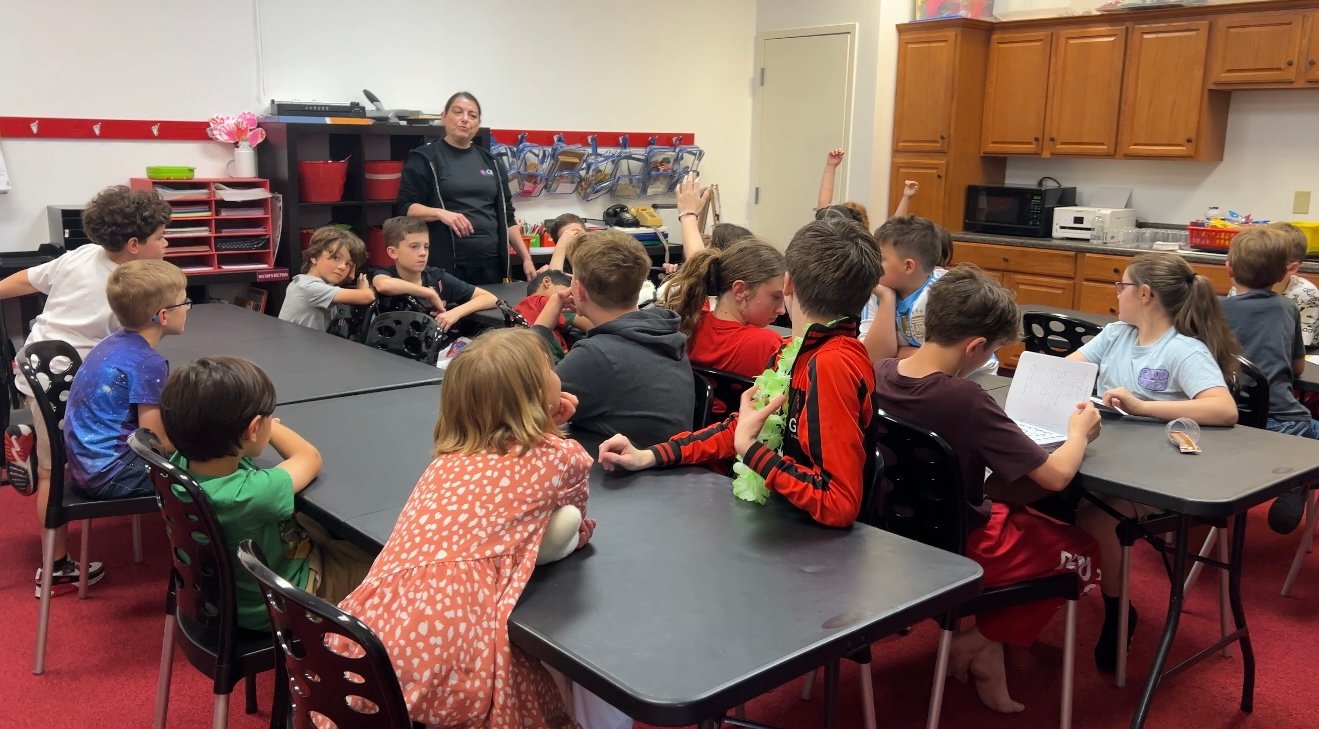
See Our Homeschool Day in Person
Book a consultation to meet our Director, tour the campus, and see how enrichment, academics, and PE fit together in one day. A director interview is part of enrollment, so it’s the best first step.
Book a ConsultationOr call us at (731) 324-3850
Frequently Asked Questions
A homeschool enrichment program is a class or set of classes that adds to what a family teaches at home. It usually covers subjects that are hard to do well at the kitchen table, such as art, music, science labs, physical education and life skills, and it gives homeschooled kids regular time with peers and other adults.
Not always. In a traditional co-op, parents take turns teaching each other’s children and usually stay on site. Many enrichment programs are drop-off, with paid instructors and no teaching duties for parents. Some programs mix the two, so ask how the teaching is staffed before you sign up.
There is no set number. Many families start with one or two days a week so enrichment supports their home curriculum instead of crowding it out. If you need structured time out of the house most days, a full-day or hybrid program that includes enrichment may fit better than stacking separate classes.
GMA’s full-day homeschool schedule includes an Electives and Enrichment block from 12:45 to 2:00 PM with arts, life skills, reading and creative projects. The day also includes core academics, tutoring and homework support, and structured physical education through martial arts from 3:00 to 4:30 PM.
Weekly tuition is $170, with a $240 startup fee that includes a uniform and a $50 per week off-week maintenance fee. Curriculum is separate: the Christian-based option is $45 per month per child, or Alijah Academy is $100 for the first child plus $25 for each additional child. Family discounts are available.